What is the Income Statement?

The income statement, also known as the statement of operations, statement of earnings, or profit and loss (P&L) statement, is a financial report that provides an overview of a company's financial performance over a specific period. It details how much revenue the company generated, the costs incurred to produce that revenue, and ultimately, the company’s profitability and potential for future growth.
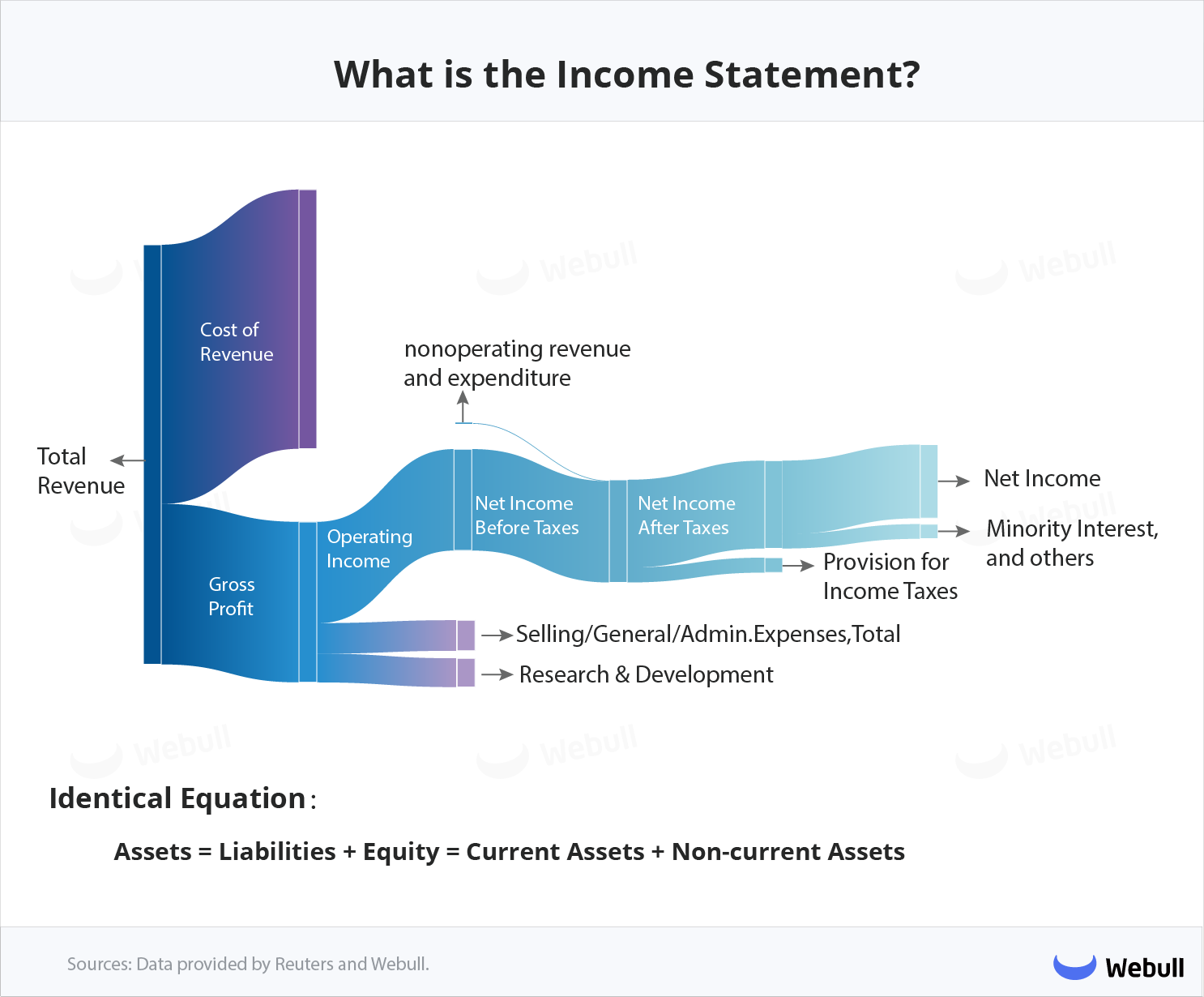
Structure of the Income Statement
At its core, the income statement follows a basic equation:
Net Income = Revenue – Expenses
However, this calculation process includes several key components:
Revenue
Operating Revenue: Income from the company’s core business activities (e.g., sales of goods or services).
Non-Operating Revenue: Income from secondary sources, such as investments or asset sales.
Expenses
Costs directly associated with generating revenue, such as the cost of goods sold (COGS), operating expenses, and interest payments.
Net Income
The company’s profit after subtracting all expenses from total revenue. This is the "bottom line" of the income statement and a key measure of profitability.
Why Is the Income Statement Important?
The income statement provides insights into a company’s financial health and performance, making it popular among investment analysts and investors. Here’s why:
- Profitability Assessment: It shows whether the company is generating profits or losses.
- Growth Potential: Revenue trends and earnings growth can indicate the company’s future performance.
- Valuation Models: Many valuation models, such as price-to-earnings (P/E) ratios, rely on earnings data from the income statement.
The Bottom Line
The income statement is a tool for understanding a company's profitability and financial performance over time. By analyzing the relationship between revenue, expenses, and net income, investors and analysts can assess the company’s financial health, evaluate its growth potential, and make informed decisions about its valuation and investment opportunities.
Head to Webull Learn to enhance your knowledge about Stocks, ETFs, Options, and more! Webull is commited to providing you with the materials you need to make more informed investment decisions.
